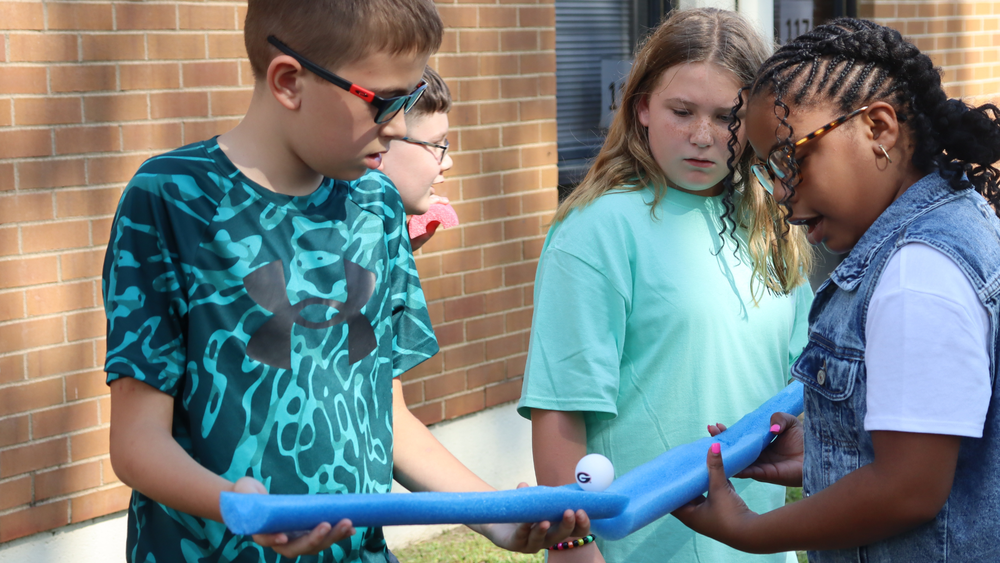
Students at Hutto Elementary School recently put their teamwork, communication and problem-solving skills to the test during a hands-on challenge as part of the school’s NASA HUNCH program.
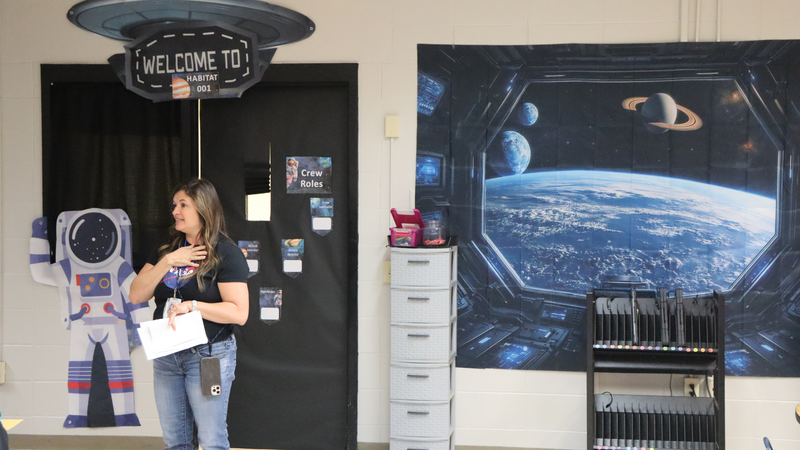
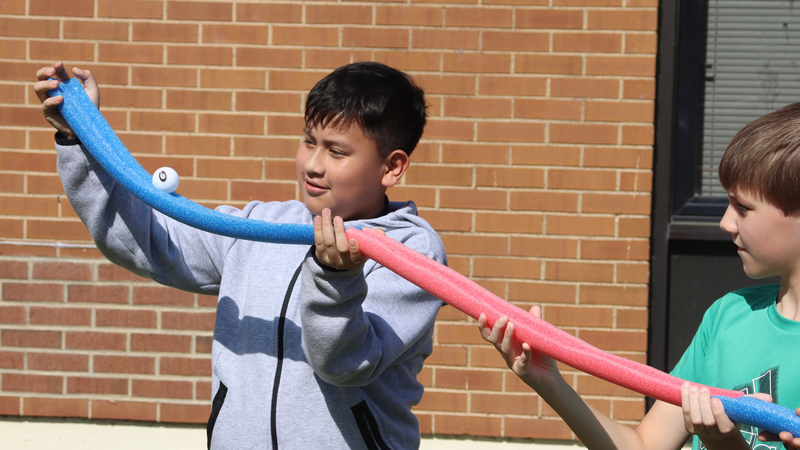
Led by Ms. Vickers and Ms. Merritt, students took on the Gutter Ball Pipeline Challenge, where they were transformed into a “flight crew” with an important mission: safely transport a ping-pong ball, representing a vital space energy core, through a pipeline constructed from individual pool noodle segments and successfully deliver it into a target bucket.
There was one catch. The ball had to remain in continuous motion.
Students worked together to position their sections of pipe, carefully control the angle and speed of the ball, and quickly move to the front of the line once the ball passed through their section. If the ball stopped, rolled backward or touched the ground, the crew had to regroup and try again.
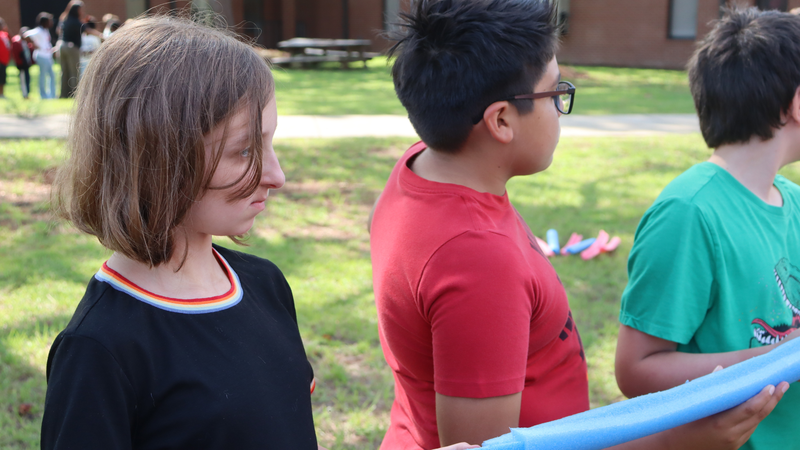
As students progressed, the mission became increasingly difficult. Challenges included navigating turns and obstacles, completing the activity with fewer team members actively moving the pipeline, relying on verbal directions, and even attempting portions of the mission with limited communication.
The activity also provided an important reminder that STEM is not always about technology. Science, technology, engineering and mathematics can come to life through simple, hands-on experiences that challenge students to think, create, communicate and solve problems together. With a poole noodle, a ping-pong ball and a shared goal, students were able to explore concepts involving engineering, motion, angles, gravity and teamwork.
Success required students to think critically, communicate clearly, adapt when a plan did not work and recognize how their individual role contributed to the success of the entire team.
The activity is part of HES’s involvement with NASA HUNCH, a program that gives students opportunities to engage in authentic, project-based learning connected to NASA and real-world STEM concepts.
Through activities like the Pipeline Challenge, Ms. Vickers and Ms. Merritt are helping HES students see that engineering and problem-solving are rarely individual efforts. Reaching the goal takes collaboration, patience, creativity and a willingness to make adjustments along the way.
For these young “cadets,” getting the ball safely into the target bucket was more than completing a mission. It was a lesson in what can happen when a team works together toward one shared goal.